
Size Matters.

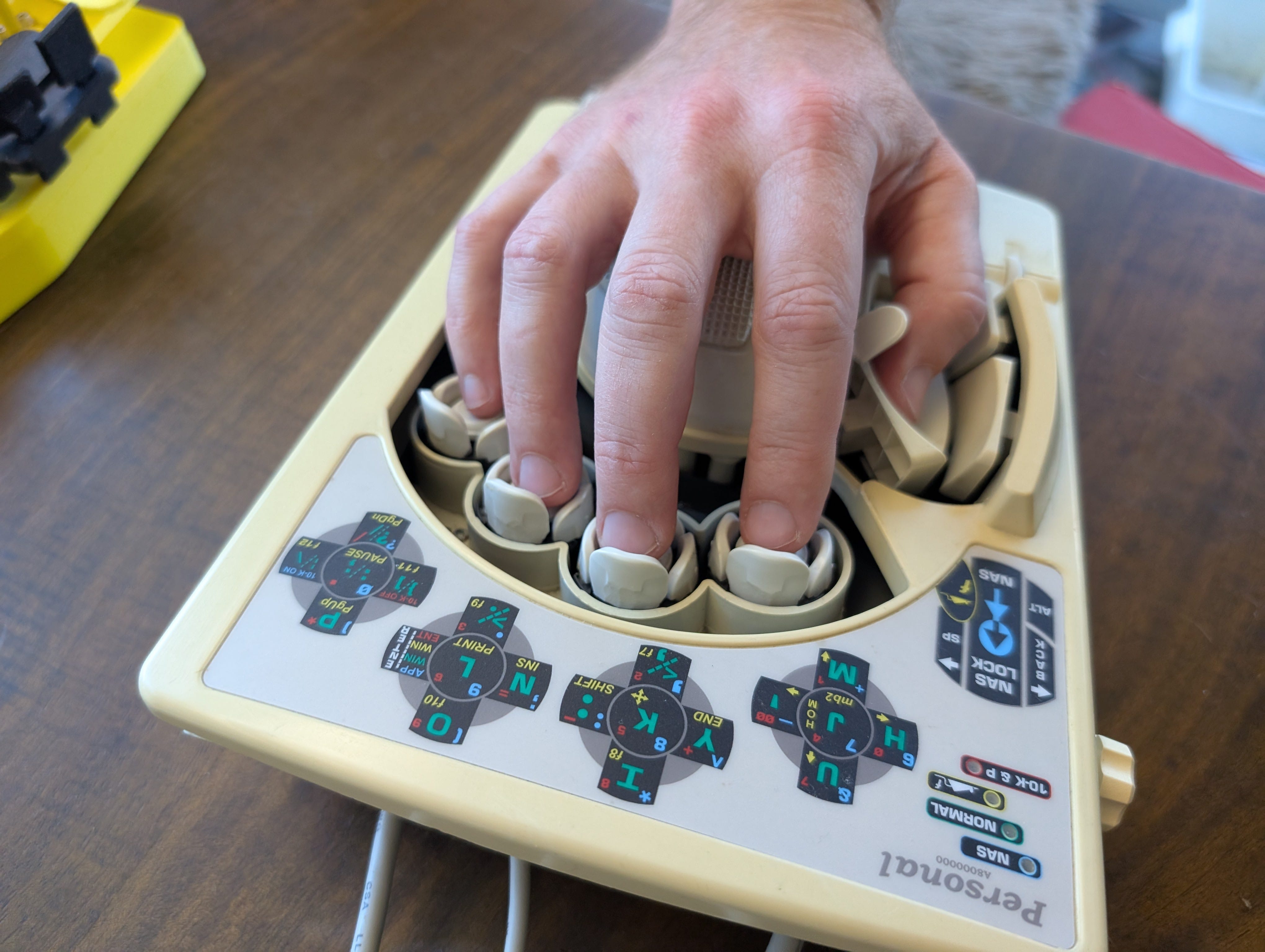
Throwback time: Here’s my hand on a Datahand. This saved my career. It had more splay than I realized at the time, because I had no other options, but you’ll notice when you meet an old Datahand user that they’re generally a male with average or larger hands. There’s selection bias there in terms of most users also having worked as programmers or in other male-dominated fields, but the anatomical realities are unmistakable. Small hands with shorter fingers would have way more splay, and be less comfortable.
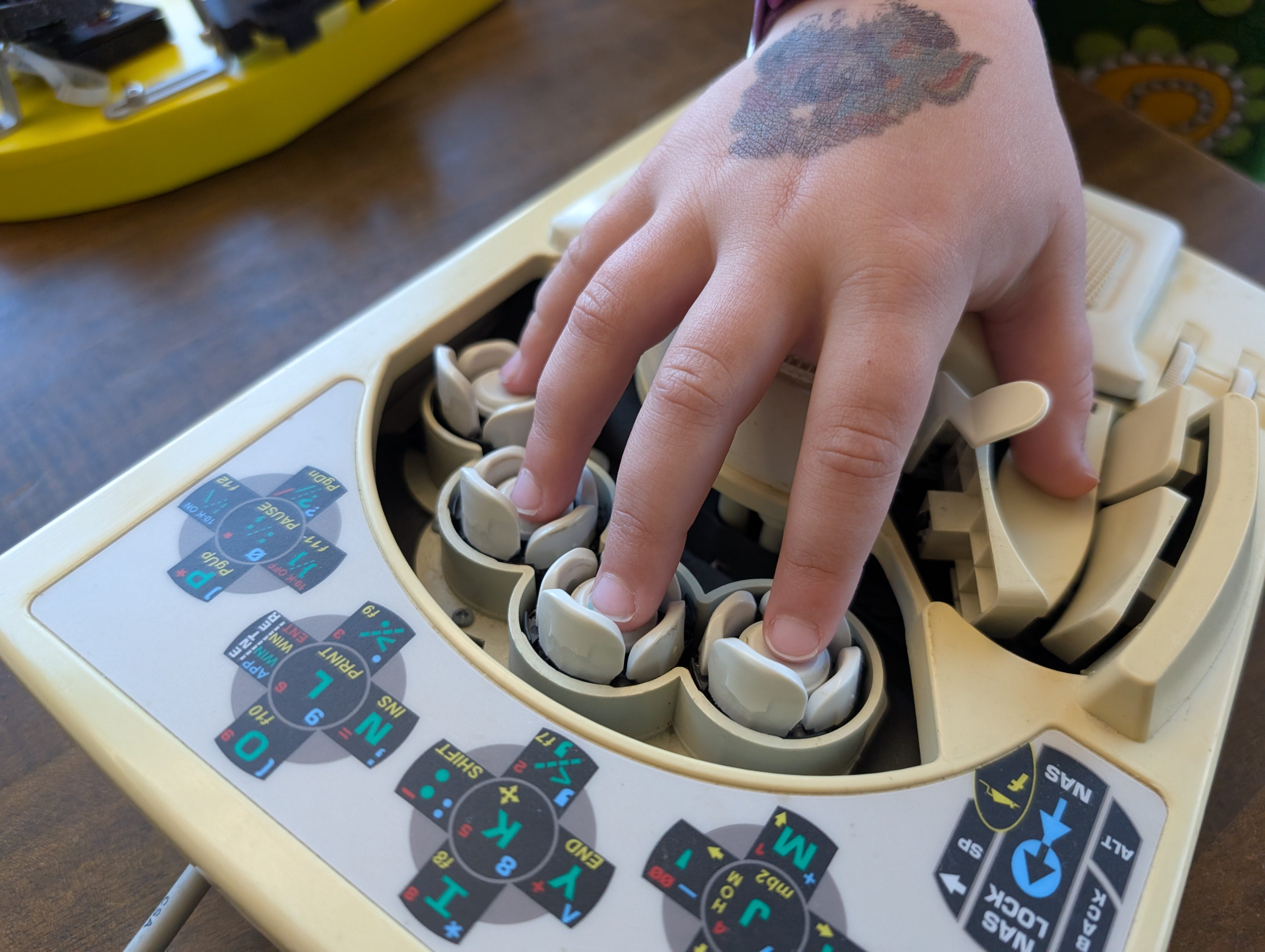
Case in point: Here’s my 6yo daughter’s hand on a Datahand. Note the wide splay and impossible thumb fit.
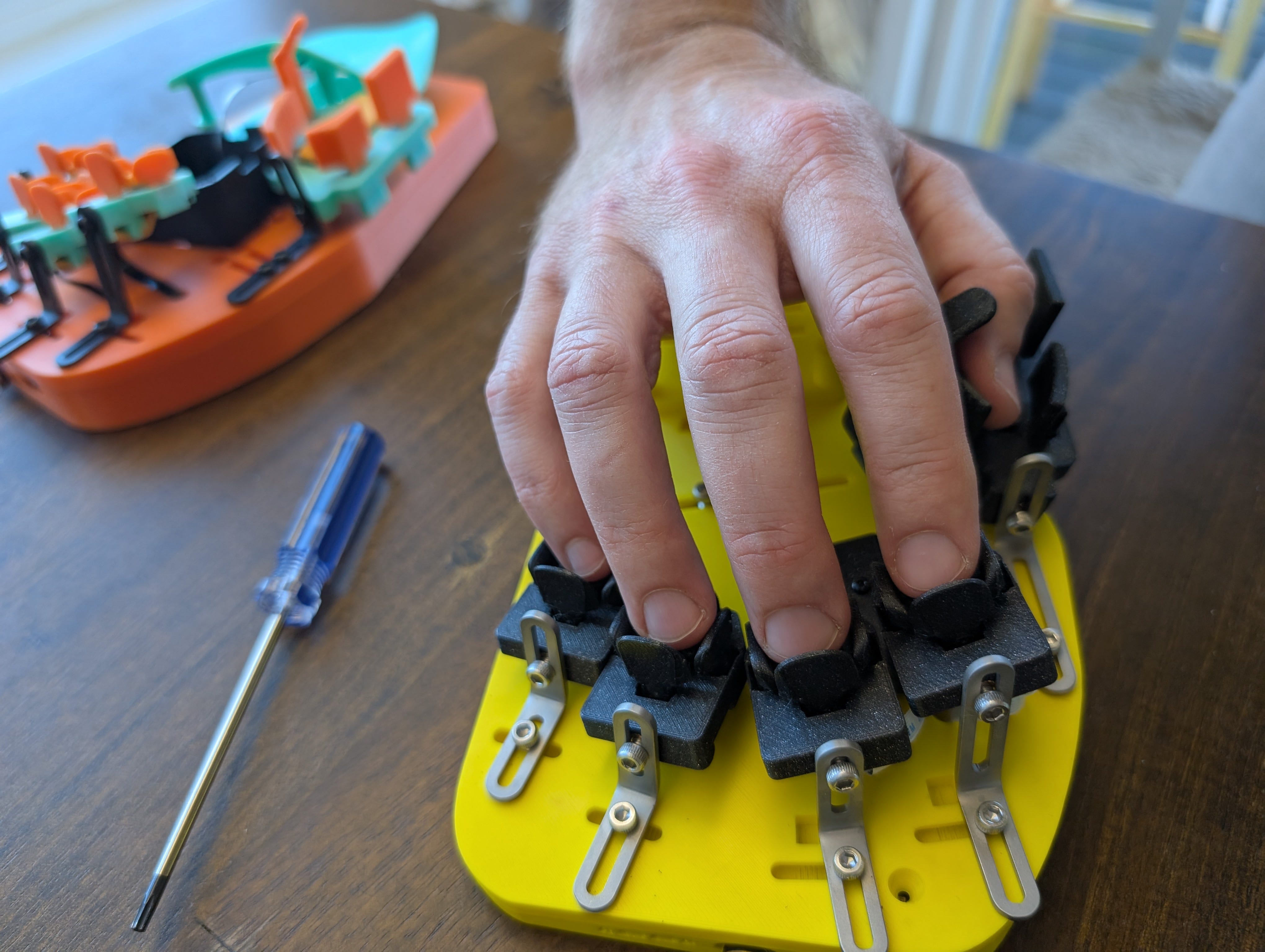
Svalboard Lightly addressed this with a major reduction in splay: about 10mm across the fingertips. This requires far less stretching of the hand, and accommodates fairly small-handed individuals. I doubt there was ever a Datahand user with a palm width under 70mm. There are Lightly users with truly small hands.
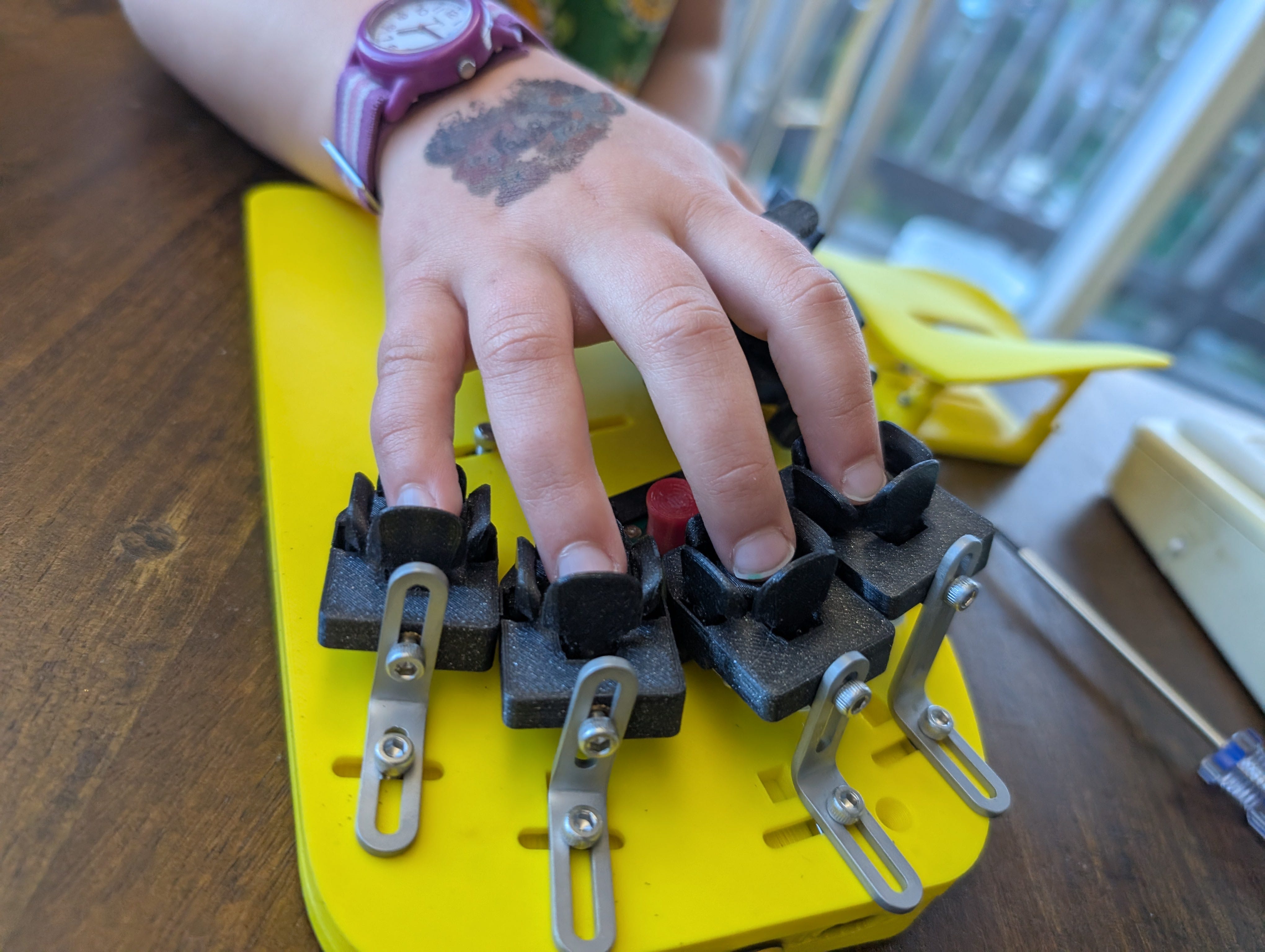
Here you can see my 6yo’s hand on Lightly. Better, but still too much splay to be truly comfortable. We’ll ignore thumb fit for now, as children don’t actually have long enough thumbs to utilize a 5-key DH/Sval style thumb cluster 😅
From day one, I’ve been hunting for design paths which can further reduce splay and improve fitment for users with anatomy on the ends of the bell curve.
Here’s an example of my very latest prototypes — ultra-narrow clusters that remove a further 9mm or so from overall splay.
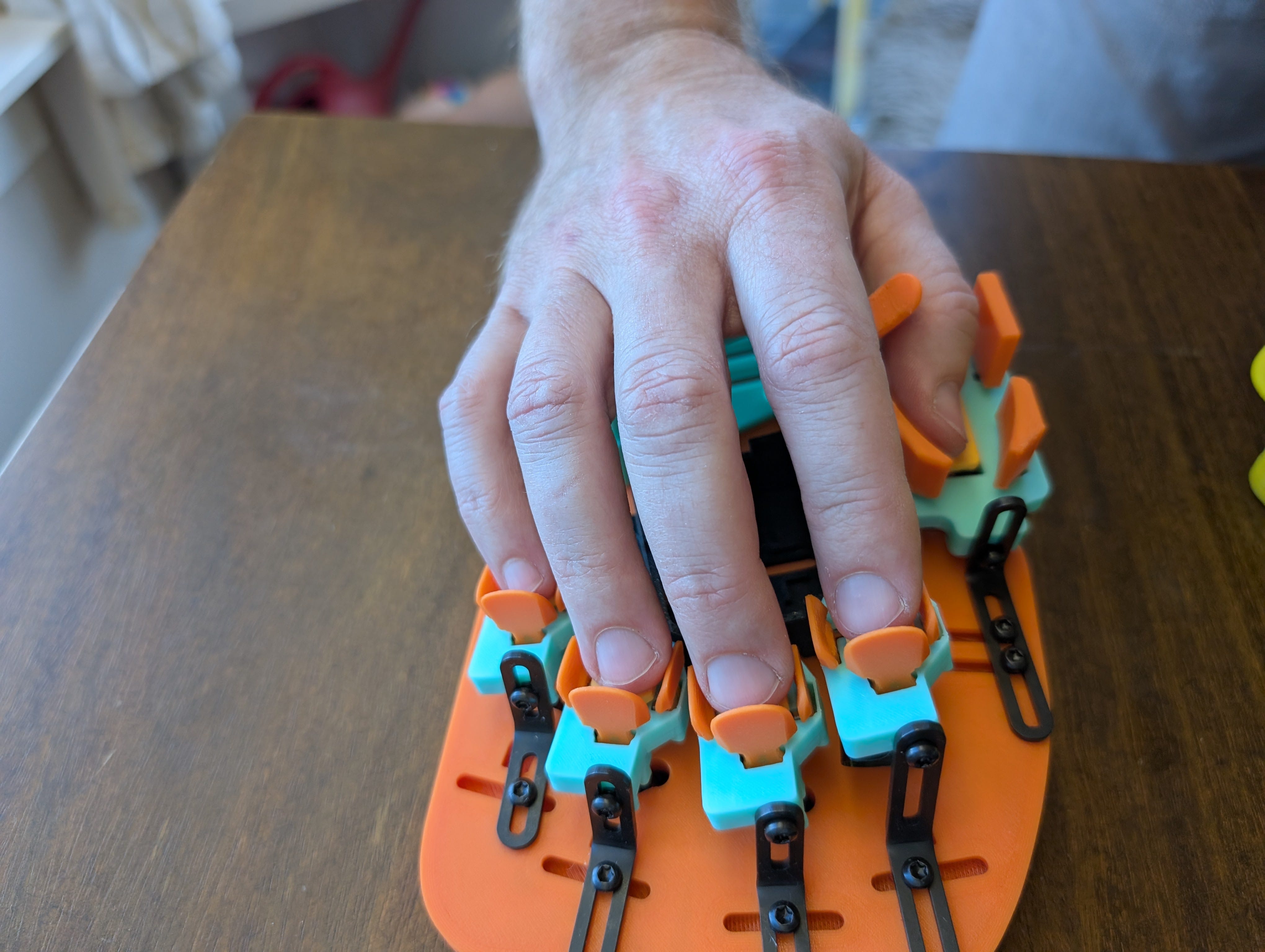
Here with the 6yo again — actually in a splay range that she can plausibly operate.
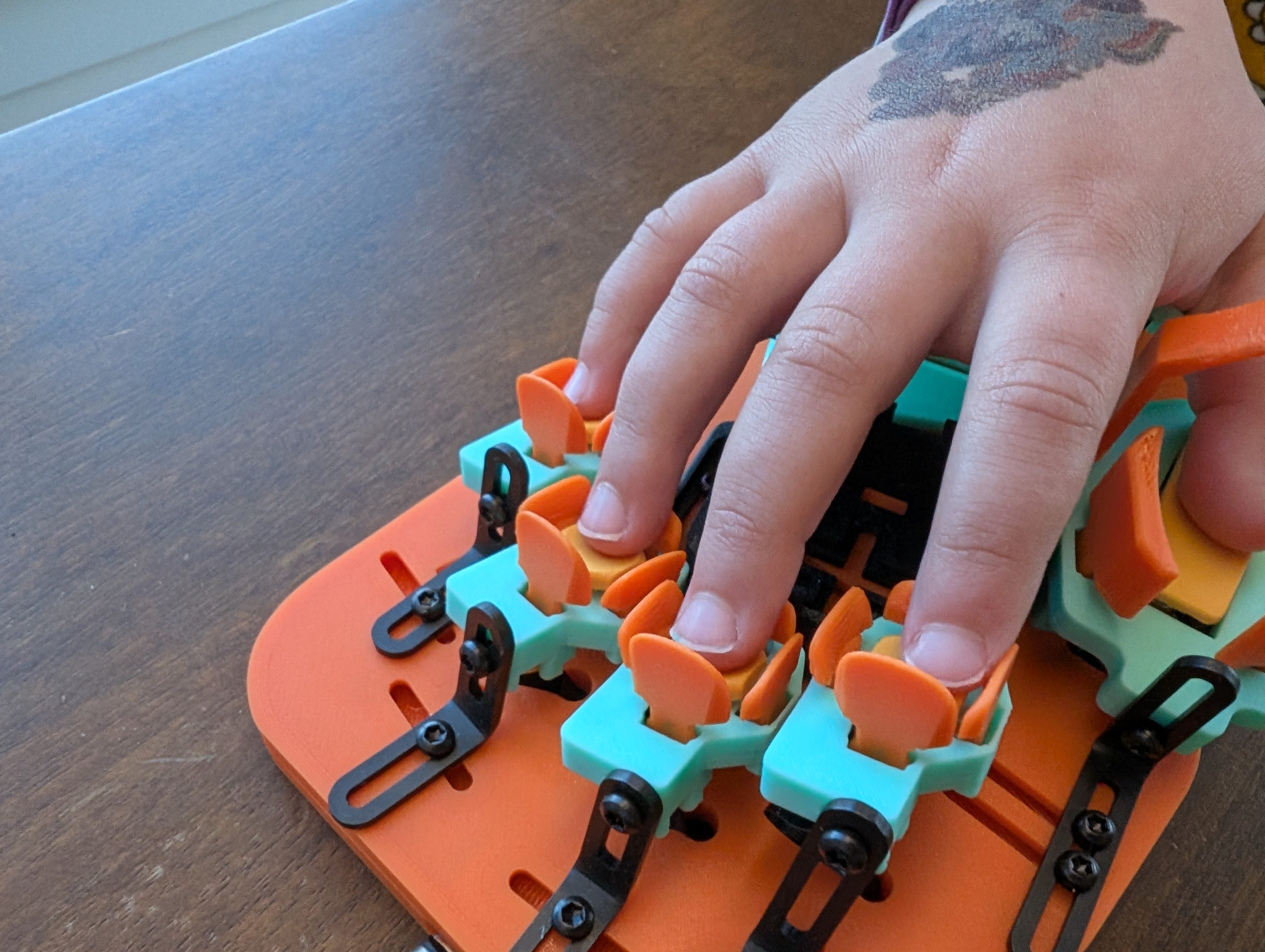
Now obviously the fit challenges of a 6yo are extreme, and I’m not actually motivated to sell these devices to literal children for a wide range of reasons, but this serves to illustrate a point: Svalboard has taken Datahand from the large side of the bell curve down through the middle and now into the small end as well. Women with palm widths in the 60mm range and hand lengths down around 140mm are using them happily. Even the original Alpha design was far more comfortable for me than Datahand, and the latest stuff is better still. It’s actually too narrow in some cases!
Which means that I’ve finally found this edge of the fit problem space — it only took what, two and a half years of development?


As a small-handed woman, I cheer this new development!